Smarter ERP Solutions for Philippine Businesses
DynamIQ provides you with SAP Business One, an ERP Solution in the Philippines. We provide you access to a wide array of features and customizations for the various departments of a business.
All Your Business Essentials in One Place
As a trusted provider of ERP solutions in the Philippines, DynamIQ brings together all your essential business functions into one streamlined system. With unified tools and real-time oversight, we can help you simplify daily operations, eliminate data silos, and maintain full control across departments.

Finance and Accounting
Automate invoicing, track cash flow, and generate tax-compliant reports—giving you real-time visibility and freeing your team from manual tasks.

Purchasing and Procurement
Manage vendors, monitor purchase requests, and control procurement in real time for better cost oversight and supply chain efficiency.

Human Resources
Centralize employee records, automate payroll, and streamline hiring and performance tracking, all from one platform.

Inventory Management
Track inventory in real time, reduce waste, and avoid stock outs across multiple locations with accurate, up-to-date data.

Analytics and Reporting
Access real-time dashboards and reports to monitor performance and make informed decisions quickly.

Sales and Customer Relationship Management (CRM)
Manage leads, automate sales, and engage customers—supporting the full customer journey in one connected system.
Ready to Upgrade Your ERP System in the Philippines?
Ready To Get Started?
If you contact us today, we will reply to you within 24 hours!
If you contact us today, our team will reply to you within 24 hours. Don’t hesitate to set up a consultation with us to discuss the best ERP solution for your company.
ERP Solutions in the Philippines
Many Filipino businesses are growing rapidly day by day. Don’t wait until it’s too late to implement ERP solutions in the Philippines. As your organization expands, so does the amount of data to track and monitor.
Using spreadsheets and different platforms can lead to costly duplicates and wasted time. Say goodbye to these issues with an ERP solution!

What are ERP Solutions?
Enterprise Resource Planning (ERP) is a type of software used to integrate and manage different aspects of a business. It enables organizations in the Philippines to put together multiple business processes in one system, making it easier to implement resource planning.
The best ERP solutions in the Philippines have a central database that collects information from different departments — such as finance, sales, procurement, CRM, human resources, and more. This provides the Filipino workforce more visibility to crucial data from different aspects of their organization, which helps improves analytics and processes.
Since the processes of different departments are interconnected and data is available once needed, it leads to better accuracy, productivity, efficiency, and collaboration.
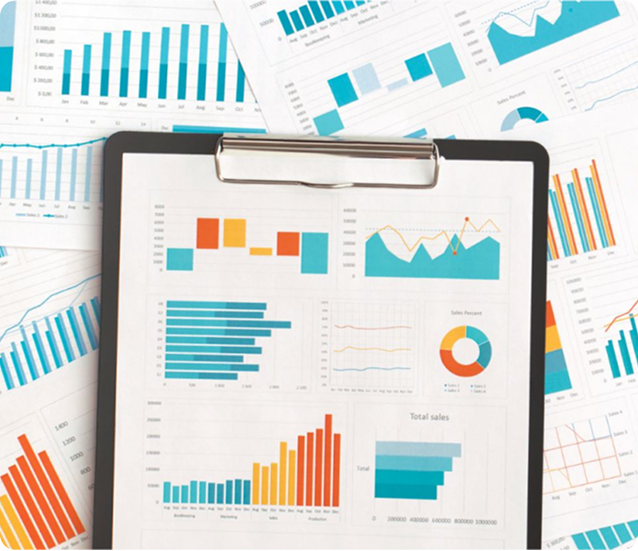
Components of ERP Solutions in the Philippines
A number of business processes can be integrated into an enterprise resource planning system. This will streamline day-to-day operations toward profitable growth. Below are some business aspects included in ERP solutions in the Philippines.

Finance & Accounting
This module handles core financial functions such as general ledger, accounts payable and receivable, budgeting, and tax reporting. By automating routine accounting processes, it enhances accuracy and helps maintain compliance with financial regulations. Real-time reporting tools provide clear insights for tracking and managing financial performance.

Purchasing
ERP solutions in the Philippines streamline procurement workflows—from purchase requisitions to order fulfillment and vendor management. Centralized tracking improves cost control and delivery accuracy. Businesses gain real-time visibility into their sourcing and supply chain transactions.

Manufacturing
The manufacturing module supports production planning, scheduling, and coordination across departments. It connects raw materials, inventory, and operations to maintain quality and efficiency. This integration is essential for companies producing goods at scale.

Material Requirements Planning (MRP)
MRP tools help forecast demand, schedule production, and plan purchases based on current and projected inventory needs. The system ensures materials are available when needed, minimizing delays and stockouts. It enhances coordination between procurement, warehousing, and production.

Inventory Management
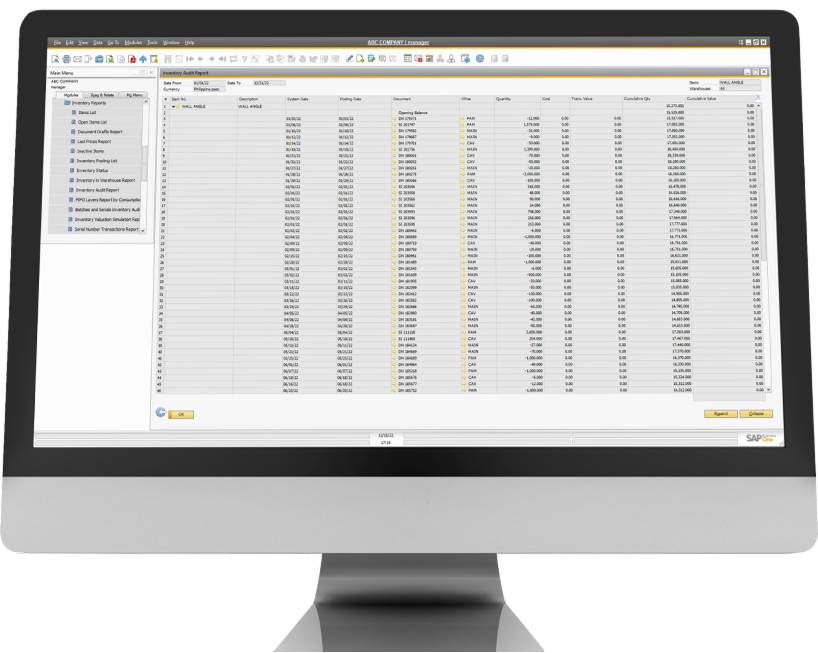
This module monitors stock levels, warehouse operations, item records, and inventory valuation. Automated tracking ensures timely replenishment and reduces overstock and stockouts. It delivers accurate, real-time data to support supply chain decisions.

Customer Relationship Management (CRM) & Sales
CRM tools consolidate customer profiles, sales pipelines, and interaction histories in one system. Integrated sales processes improve forecasting, order processing, and client servicing. These features help drive stronger relationships and revenue growth.

eCommerce
The eCommerce module syncs online transactions with ERP back-end processes such as pricing, inventory, and accounting. It enables real-time updates across platforms and ensures accurate data and a seamless customer experience. Businesses benefit from unified operations across both physical and digital channels.

Service
Service management tools handle warranty tracking, service orders, and customer support tickets. These features improve service response times and documentation. They help maintain consistent after-sales performance and client satisfaction.

Job Costing
Job costing tools track project-specific labor, material, and overhead expenses. This data helps determine profitability and supports accurate billing. Companies gain better financial visibility over custom or short-term projects.

Project Management
This module enables structured planning, budgeting, and tracking of ongoing projects. It supports task assignments, milestone monitoring, and financial analysis. Managers can align resources and timelines for smoother project execution.

Human Resources
HR tools consolidate employee records, manage payroll and benefits, and support recruitment workflows. Attendance, leave, and performance can all be monitored in one platform. This helps businesses align workforce planning with operational needs.

Analytics & Reporting
ERP analytics consolidates data from all modules into dynamic dashboards and reports. These tools support performance monitoring and decision-making at every level. Accurate insights help businesses stay agile and competitive.
The Business Value of ERP
Many businesses may not realize the long-term value that digital solutions can bring. Far beyond just organizing data, ERP solutions in the Philippines serve as a foundation for smarter operations and sustainable growth.

Streamlined Operations
Manual tasks often slow teams down, leading to delays and inconsistent output. This type of digital solution automates your core workflows, such as invoicing, procurement, and reporting, so your staff can focus on high-impact work. This helps improve day-to-day efficiency while keeping operations aligned with your long-term goals.

Unified Data
When each team works from the same system, there’s less room for error and miscommunication. The software ensures that data is consistent, accurate, and available across departments in real time. Whether it’s a sales forecast or a stock update, everyone sees the same reliable information.

Financial Oversight
Your finances are at the heart of every business decision. These solutions provide complete visibility into expenses, cash flow, and budgeting, while also ensuring compliance with Philippine tax regulations. With accurate reporting and automated processes, your team can close the books faster and plan with confidence.

Scalable Growth
As your business expands, your systems should keep up, not hold you back. A flexible software grows alongside your company, making it easy to onboard new users, add features, or enter new markets. This means you can scale strategically without overhauling your core operations.

Data Security
Security risks are a growing concern for businesses of all sizes. These solutions come with built-in safeguards, such as data encryption, user permissions, and automated backups. These measures protect sensitive information while ensuring business continuity.

Cross-Team Collaboration
Disconnected systems lead to disconnected teams. With an integrated platform, your departments can work together more effectively through shared dashboards, unified workflows, and centralized communication. This promotes alignment across your organization and enables better decision-making from the ground up.
How to Tell If Your Business Needs an ERP System
Growing a business brings greater complexity, from managing more people and expanding operations to keeping data aligned across teams. These challenges can slow momentum if your current systems can’t keep up. ERP solutions in the Philippines offer a way to unify and streamline your processes. This makes it easier to scale efficiently and sustainably.

Manual and Time-Consuming Processes
If your business still relies on spreadsheets or disconnected tools, manual processes may already be causing delays and inefficiencies. These repetitive tasks not only slow your team down but also increase the risk of human error. An ERP system automates workflows to help you save time and focus on higher-value tasks.

Rapid Business Growth Causing Operational Strain
When systems can’t keep up with your pace of expansion, operational bottlenecks begin to appear. Whether it’s managing new locations, scaling your workforce, or tracking increased orders, outdated tools can become a liability. ERP solutions offer the structure and scalability you need to grow with confidence.

Lack of Real-Time Visibility and Reporting
Without real-time data, even basic decisions can take longer and carry more risk. If your teams can’t access accurate insights when they need them, productivity and responsiveness suffer. A business management system unifies your data, enabling faster reporting and better-informed decisions across the board.

Complex or Inefficient Supply Chain and Inventory Management
Managing stock and logistics through fragmented systems often leads to stockouts, delays, or excess inventory. These issues reduce profitability and can frustrate customers and partners alike. ERP platforms help streamline procurement, improve inventory accuracy, and strengthen supply chain coordination.
Choose DynamIQ as Your ERP Partner in the Philippines
Many businesses in the Philippines use SAP Business One as their ERP solutions in the Philippines. Here at Dynamiq, we are proud that we are an accredited SAP service partner helping small to mid-sized enterprises to have greater control over their business.
This can be used both as an on-cloud and on-premise solution. Through SAP Business One, businesses can streamline key processes and gain better business insights.

Implementation
Our team at DynamIQ can help you carefully plan and train your team for your new ERP system. We can help you plot your timeline and offer our expertise as the project progresses.

Security
We make sure that the data in your ERP solution remain confidential since many of your documents have sensitive data. At DynamIQ, we assure you that your data is kept secure while remaining compliant with data privacy regulations.

Industry-Specific Requirements
At DynamIQ, we understand that there are industries that have specific requirements that need to be addressed by their ERP solutions in the Philippines. We make sure that these are customized and implemented into your system through close collaborations with your team.

Integration with other systems
There are companies that already have other software and systems in place like payroll and inventory management. DynamIQ can help you integrate these into your new ERP solution since SAP Business One has integration capabilities.
Implement the Best ERP Solutions in the Philippines with DynamIQ!
If you’re interested in implementing an ERP solution in your organization in the Philippines, you can contact us here at DynamIQ! Our mission is to be the premier enterprise solutions company in the country by providing the best ERP solutions for Filipino companies who need them.
Frequently Asked Questions (FAQ)
What is the typical timeline for implementing SAP Business One with DynamIQ?
For small to medium-sized businesses, implementation typically takes between 2 to 6 months. The exact timeline depends on factors like business complexity, module requirements, customizations, and data migration. DynamIQ follows SAP’s structured Five-Phase Implementation Methodology to ensure a smooth and efficient rollout.
Can SAP Business One be tailored to my industry needs?
Yes. SAP Business One is highly configurable and can be tailored to the specific needs of various industries. At DynamIQ, we provide industry-aligned modules and add-ons that ensure your ERP solution fits your workflows and regulatory requirements.
Is it scalable for growing businesses in the Philippines?
Built for scalability, it’s ideal for businesses at any growth stage. You can add users, expand modules, or integrate new features as your organization evolves, ensuring long-term value for Philippine enterprises
What training does DynamIQ provide for users?
DynamIQ offers comprehensive training during and after implementation. This includes guided hands-on sessions, role-based user guides, and access to local support to ensure your team can confidently use the system.
Does DynamIQ offer post-implementation support and system maintenance?
Yes. DynamIQ provides continuous support after go-live, including helpdesk access, system monitoring, updates, and ongoing optimization. This ensures your ERP solution stays aligned with your business as it grows and changes.
Today
Mockup — not connected yet